Feeds:
Posts
Comments

We recently had someone come by to purchase some California Buffalograss for his home. He had just moved into his new house and he complained that he was very allergic to his lawn. As soon as he stepped onto it, his feet would rash up! He had heard about the low allergy benefits of California Buffalograss and thought he’d give it shot. He even walked out bare footed onto our test patches out here at our nursery and his feet had no reaction!

This is more of an extreme case of allergies, but since California Buffalograss produces hardly any seed heads it’s much better for those with the regular sort of sneezy wheezy allergies too!

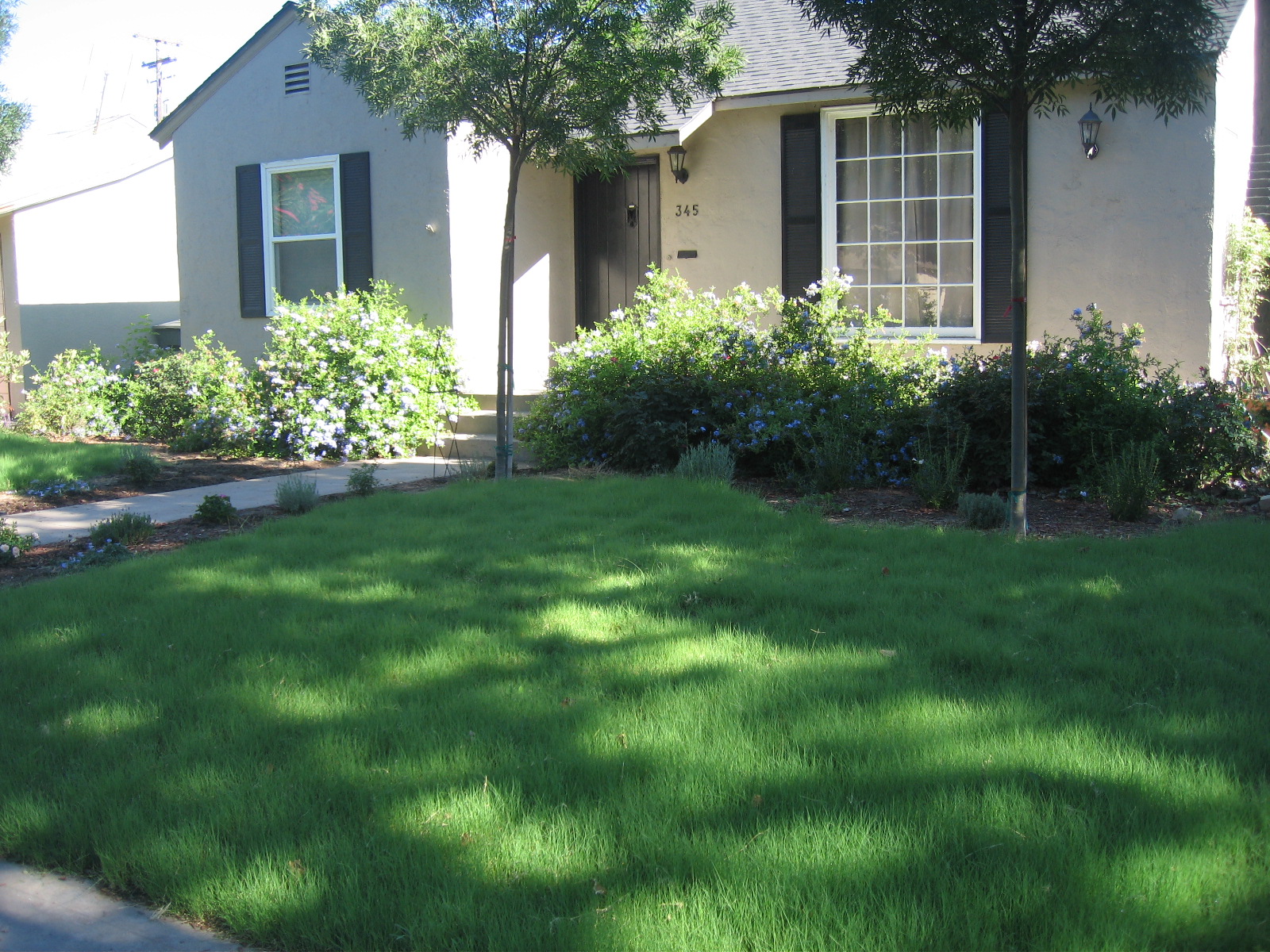
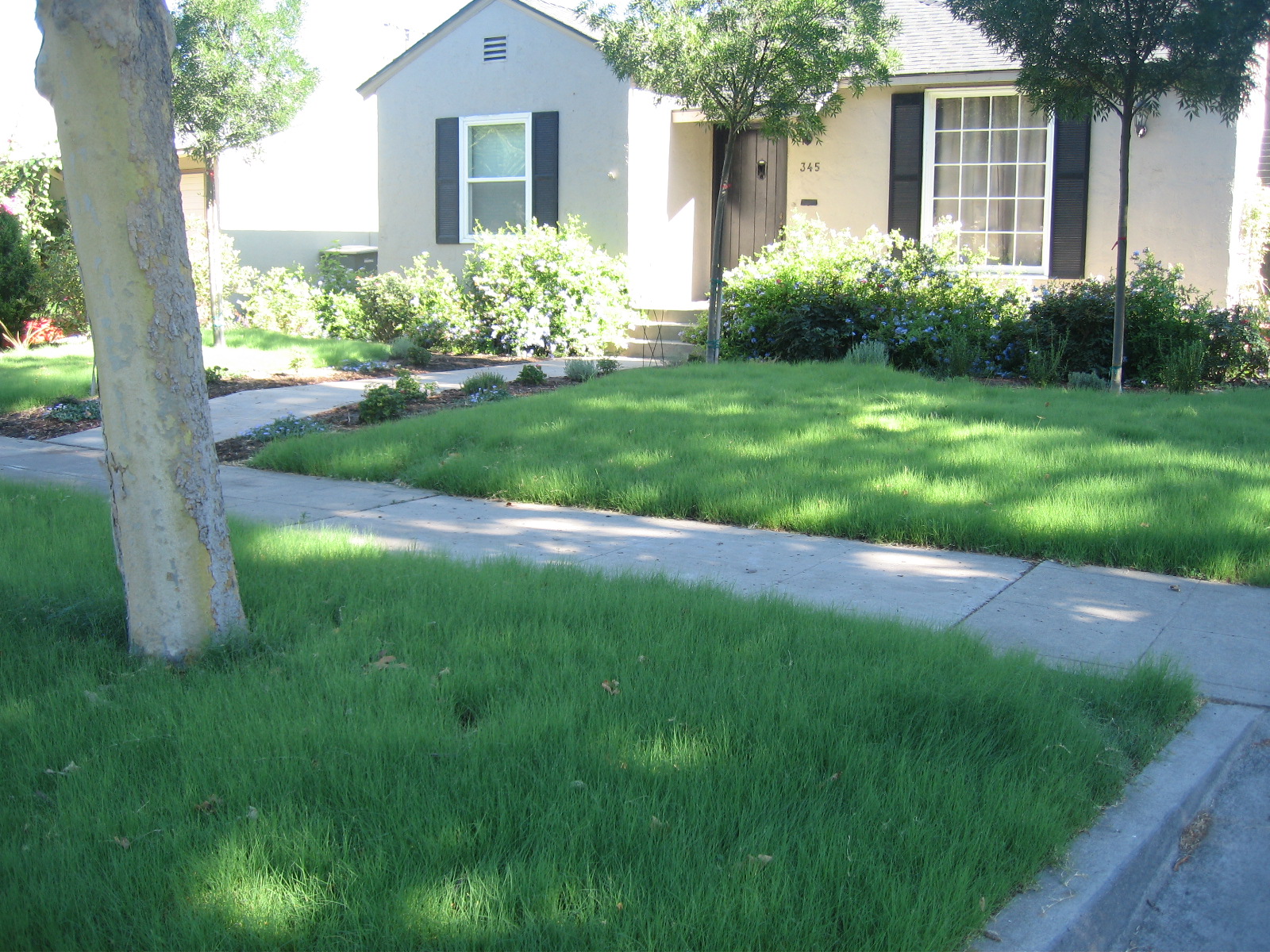
Here are pics of Madeleine Mitchell’s yard in Reedley, California! Madeleines says, ” I took 3 photos about a month apart… I now mow with an electric weed eater, that way I can keep it about 3-4 inches”. She prefers a more natural looked for her lawn.

Here is her space after installion in June:

Pictured here in July:

Shown here in August:

She also captured an image of a friend’s freshly mowed lawn in Tulare, California:

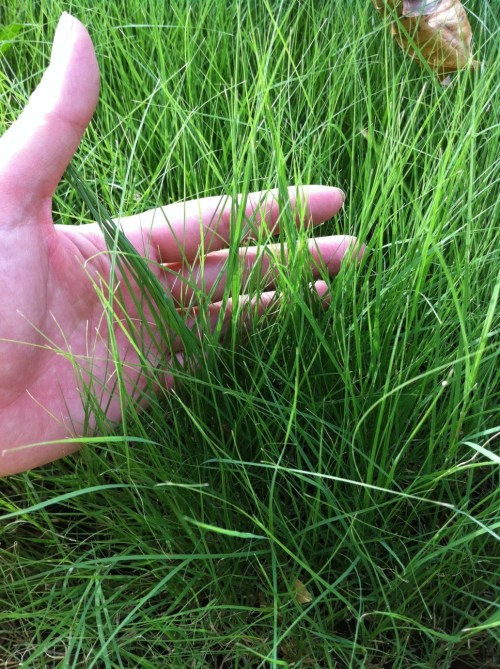
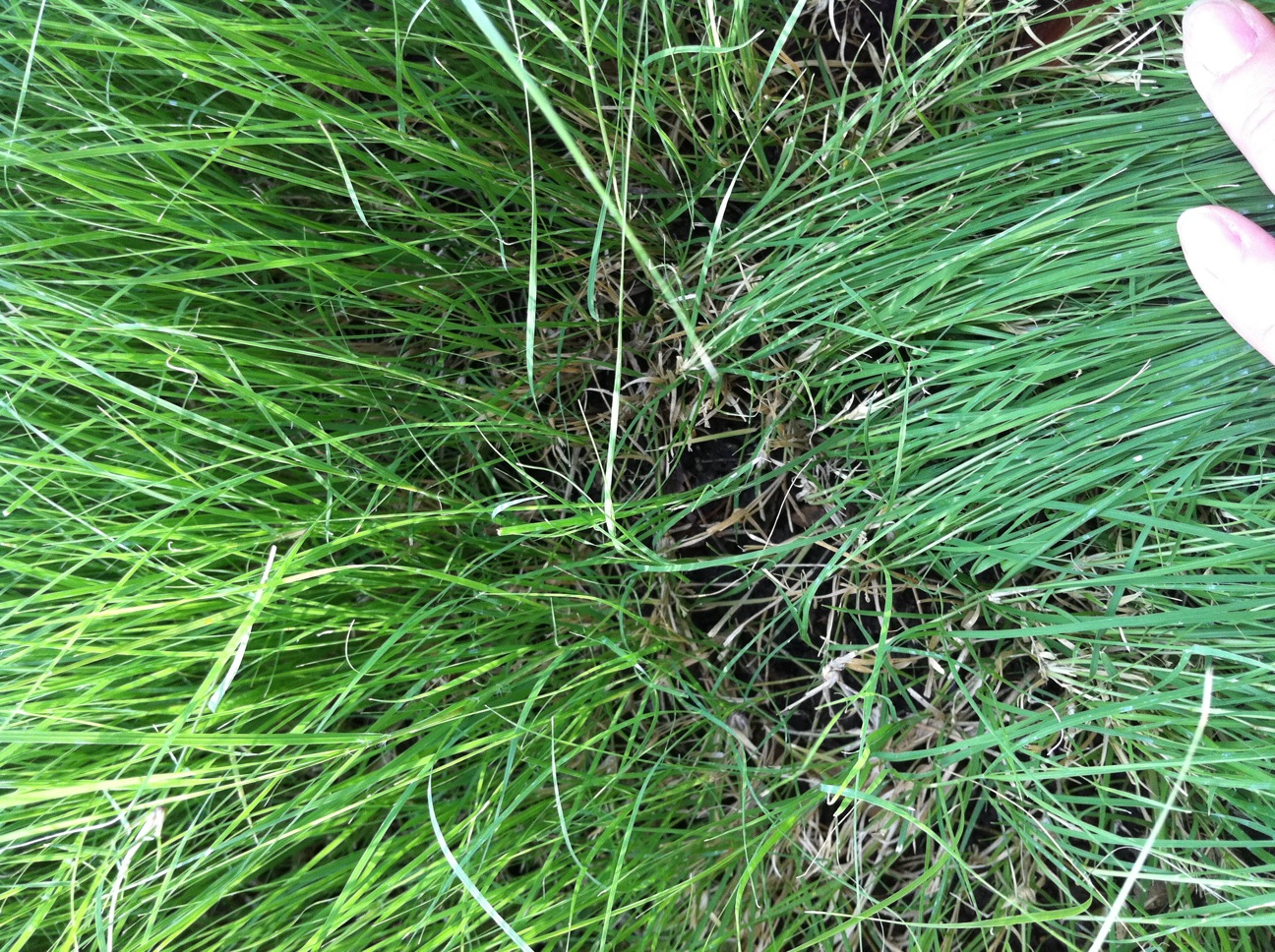
Here’s an upclose pic of California Buffalograss’s fine blades, giving it a softer feel than your standard lawn.

California Buffalograss has more of an airy apperance and feel than most traditional lawns.

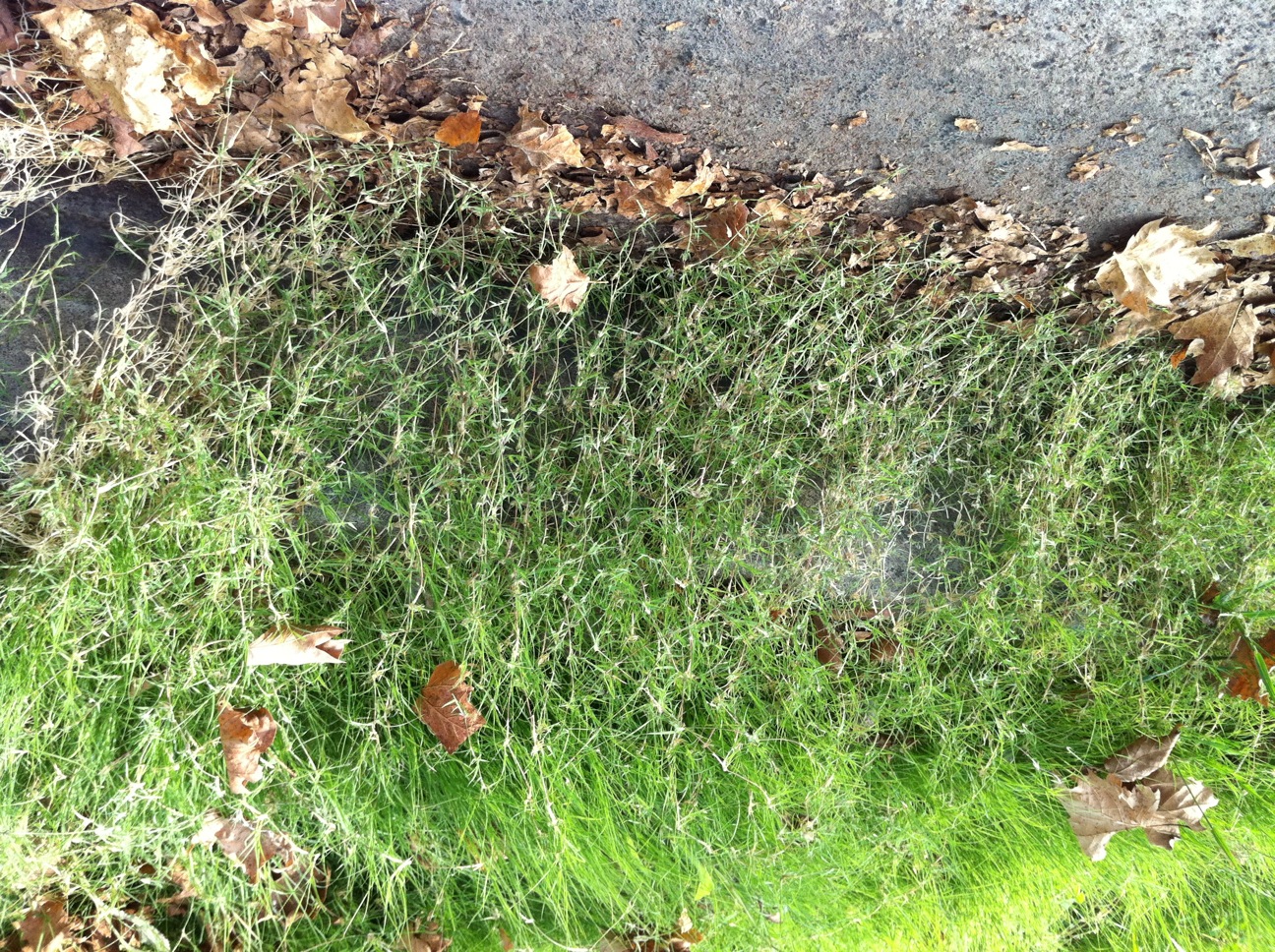
California Buffalograss spreads by sending out runners above  ground. You can see where these runners have spilled out over the curb. They can easily be trimmed to prevent spreading.

This lawn has not been mowed in several months. It is a little over 6 inches in height.

California Buffalograss was mentioned in our local newspaper! Click on the article for a larger image.

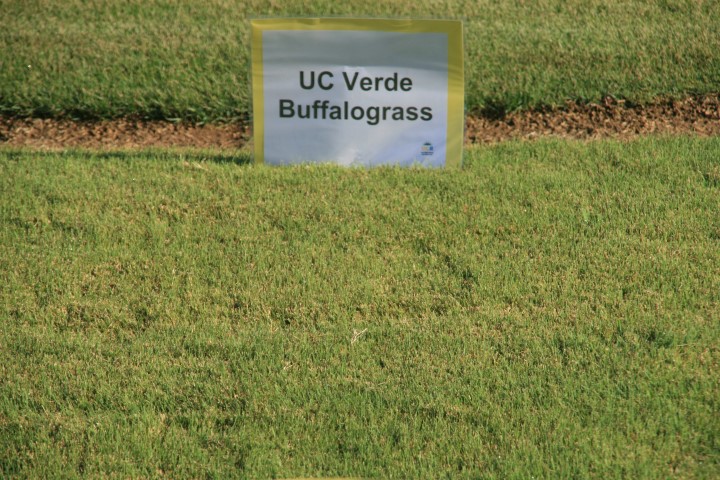
From the UC Riverside Turf Field Day (planted in April 2010):

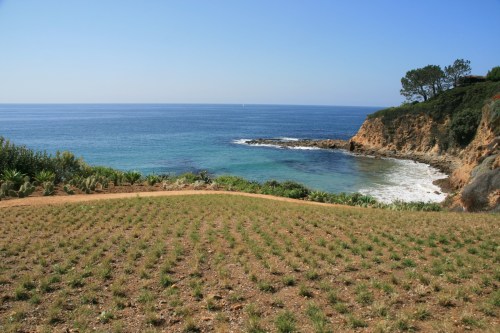
From a homeowner in Laguna Beach – at their own private cove. I want to be there right now, so jealous! 🙂

UC Davis is committed to fostering sustainable places that…includes the outdoor campus landscape, gateways to the Davis community and a network of natural reserves elsewhere in California that UC Davis manages.

Discovering and demonstrating new ways to manage water efficiently not only saves campus oerating costs, but serves as a model for a water-strapped state.

California Buffalograss, developed by scientists at UC Davis and UC Riverside, is literally adding more green to campus in an efficient way.

California Buffalograss grass needs only about 25 percent the amount of water used for other turf grasses. The grass was included in the landscaping of the new Maurice J. Gallagher Hall, home to the UC Davis Graduate School of Management, in part to meet the Gold-level certification by the U.S. Green Building Council’s Leadership in Environmental and Energy Design (LEED).

In addition to being water-efficient, California Buffalograss is also extremely tough and dense with strong disease and insect resistance, which reduces the need for chemical applications, weeding or other maintenance. Because the grass variety grows very slowly in comparison to other varieties, it also needs to be mowed far less frequently.

Click here for the full article and click here to read more about their installation of California Buffalograss.

There seems to be some confusion that there is only one kind of Buffalograss or that all types are the same. Actually, this is not the case at all. There various varities of Buffalograss out there and each one is different from the next. Some are seeded some are not, their height varies, growing conditions differ. Here’s a little bit of information on the topic:

Types of Buffalograss

Buffalo grass is native North American turf grass. Originally a native grass on plains and prairies, buffalo grass is named after American bison that fed on its gray-green foliage. Long used for livestock forage and rural turf, buffalo grass is gaining popularity as low-water, low-maintenance lawnscaping. Buffalo grass needs minimal fertilization and is pest resistant. New lawn varieties offer dense, green grass and xeriscape qualities.

California Buffalograss

California Buffalograss, developed by the University of California at Davis and University of California at Riverside, is specifically bred for California landscaping. California Buffalograss is fine-bladed, has no seed heads and is medium green in color. This slow-growing variety matures at a height 4 to 6 inches. Recommended mow height is 2 to 3 inches. Like other new cultivars, California Buffalograss can be left unmowed for a short meadow grass look.

Legacy

Legacy buffalo grass, developed by the University of Nebraska, is a dense-growing grass with a dark blue-green color. This grass is planted by sod or plugs. Legacy has no pollen or seed heads, making it a good choice for people and pets with pollen allergies. Legacy tolerates shade better than most buffalo grasses, though it will not grow as rapidly in shade as in sun. Maturing at a height of 3 to 5 inches, this variety is unmowed for a soft landscape appearance or is mowed every two to three weeks in growing season.

//

Prairie buffalo grass, developed at Texas A&M University, is a medium density grass with an apple green color. Planted by sod or plugs, this fine-bladed grass has no pollen or seed heads. This cultivar is grown in full sun with little watering and fertilizing. Prairie performs well in clay soils and matures at a height 4 to 6 inches. Remove no more than a third of the height when mowing to maintain root activity.

Stampede

Stampede is a semi-dwarf and dense buffalo grass with a kelly green color. This buffalo grass has a finer, shorter leaf blade than most buffalo grasses. Maturing at a height of 4 inches, Stampede spreads quickly and requires minimal mowing. Drought-tolerant and disease-resistant, the buffalo grass is green in summer and golden in winter.

Other Buffalo Grasses

Depending on the cultivar, buffalo grass is planted with traditional seeds, sod and grass plugs. Some cultivars such as Bison, Cody and Texoka grow from seed burs while others like Legacy, Prairie and Stampede grow by vegetative stems called stolens. Seeded varieties are often taller and produce seed heads. Vegetative varieties are preferred for fast growth and allergy sufferers. Check with regional cooperative extensions on specific buffalo grass cultivars suited to the local climate.

We carry California Buffalograss and find it to be a good fit for the west coast!

(Types of Buffalograss from Gardenguides.com)

A new report for the National Resources Defense Council claims one-third of all counties in the lower 48 states will face higher risks of water shortages due to global warming.
The report finds that 14 states face an extreme or high risk to water sustainability, or are likely to see limitations on water availability as demand exceeds supply by 2050. But in some arid regions (such as Texas, the Southwest and California) and agricultural areas, water withdrawal is greater than 100% of the available precipitation so that water is already used in quantities that exceed supply. 
 
Read the full article here.

It’s July in Fresno and it’s hotter than hot, and this California Buffalograss lawn is looking good!